
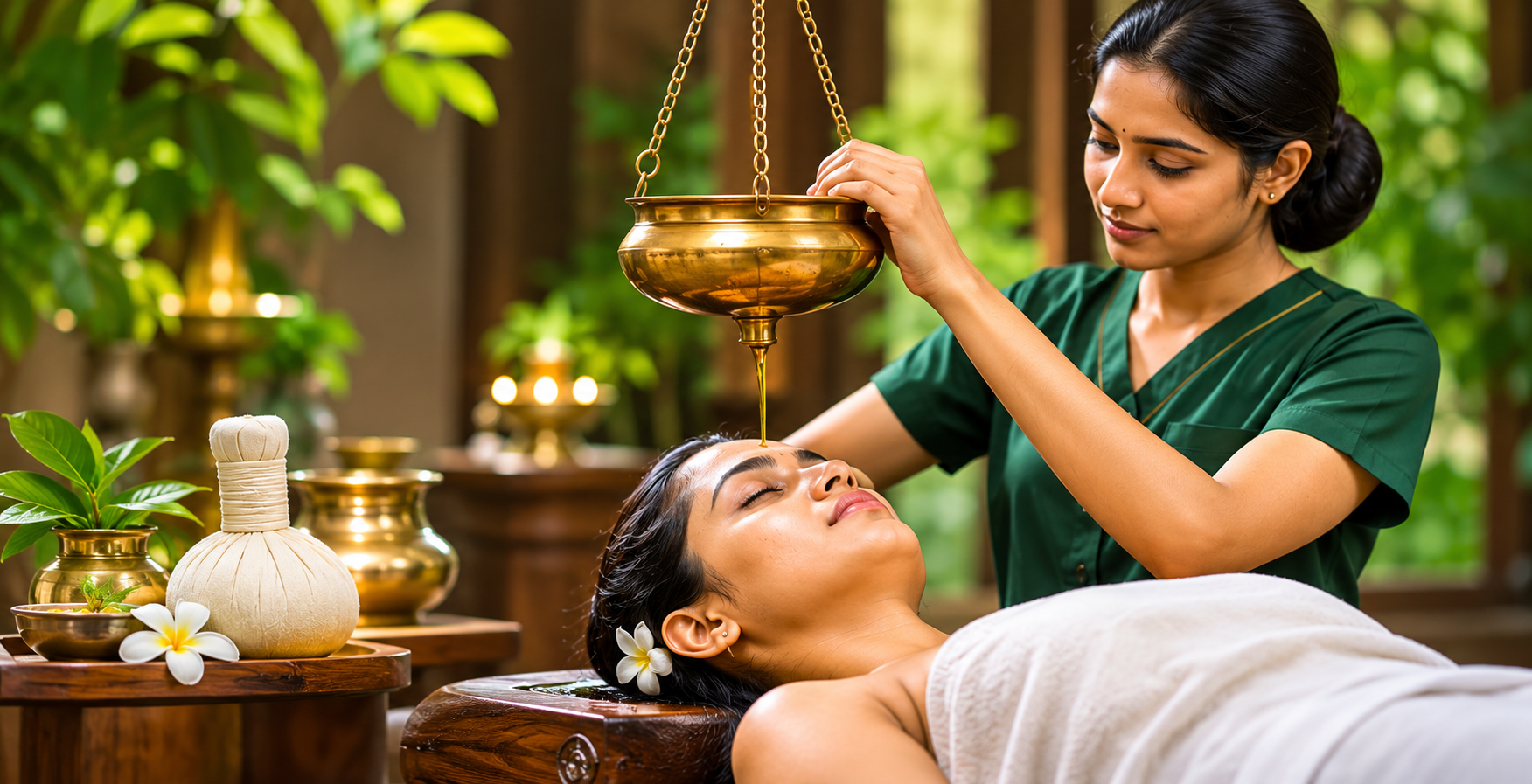
Build a Career in Ayurveda Healthcare with Jeeva Ayurveda Hospital
Are you interested in building a career in Ayurveda, Panchakarma therapies and patient care? Looking for a short-term Ayurveda course in Kochi or Ernakulam that combines theoretical knowledge with practical skill development?
Jeeva Ayurveda Hospital offers career-oriented training opportunities in Ayurveda Panchakarma and nursing-related patient care, designed for students who want to gain foundational knowledge and practical skills in the traditional healthcare sector.
Students can explore short-term and diploma-level training options with durations of 6 months and 1 year, subject to the applicable BSS-approved course structure.
With a focus on Ayurveda fundamentals, Panchakarma procedures, patient-care assistance and professional workplace skills, these programmes introduce learners to the working environment of Ayurveda hospitals, wellness centres and therapy facilities.
Jeeva Ayurveda Hospital also provides placement assistance for eligible students, helping them explore potential employment opportunities in India and abroad.
Whether you have completed school education, are looking for a new career direction or want to develop skills in the Ayurveda healthcare sector, discover the available course options at Jeeva Ayurveda Hospital, Kochi, Kerala.
Course highlights:
- 6-month short-term Certificate in Ayurveda and Panchakarma.
- 1-year Diploma in Ayurveda, Panchakarma and Nursing.
- BSS vocational course options, subject to current course-specific affiliation.
- Career-oriented theoretical and practical learning.
- Ayurveda and Panchakarma fundamentals.
- Patient-care and nursing-support knowledge.
- Placement assistance.
- Employment opportunities to explore in India and overseas.
- Training opportunities at Jeeva Ayurveda Hospital, Edappally, Ernakulam.
Start your Ayurveda healthcare career with the right training. Contact Jeeva Ayurveda Hospital for current admission details.
About the Ayurveda Panchakarma and Nursing Courses
Ayurveda is a traditional system of healthcare with a long history in India. Panchakarma is a specialised area of Ayurveda that involves traditional therapeutic procedures performed under the direction of qualified Ayurveda physicians.
The growing interest in Ayurveda hospitals, wellness centres, traditional therapy facilities and holistic wellness services has created a need for trained support personnel who understand patient care, therapy preparation, hygiene and the basic principles of Ayurveda.
Jeeva Ayurveda Hospital offers short-term and diploma-level vocational learning options for individuals interested in developing skills in this field.
The courses introduce students to the foundations of Ayurveda, basic human anatomy and physiology, Panchakarma therapy concepts, patient-care support and the professional responsibilities involved in an Ayurveda healthcare environment.
The programmes are intended to develop foundational and job-oriented skills for suitable assistant and support roles. They do not replace a BAMS qualification or a statutory nursing qualification.
Available Ayurveda Courses at Jeeva Ayurveda Hospital
Students can enquire about the following two course-duration options.
1. Six-Month Certificate in Ayurveda and Panchakarma
Duration: 6 Months
The six-month option is intended for learners who wish to gain introductory knowledge of Ayurveda and Panchakarma within a shorter study period.
The programme introduces the fundamental concepts of Ayurveda and the basic principles of Panchakarma, with an emphasis on understanding traditional procedures and the supporting responsibilities involved in Ayurveda therapy settings.
Main learning areas may include:
- Introduction to Ayurveda and its fundamental principles.
- Basic concepts of the Tridosha system.
- Introduction to Panchakarma.
- Basic understanding of human anatomy and physiology.
- Introduction to traditional Ayurveda therapies.
- Preparation of therapy rooms and related equipment.
- Hygiene, sanitation and patient comfort.
- Introduction to healthcare workplace practices.
- Communication and professional conduct.
Who should consider this course?
This course may be suitable for:
- Students interested in Ayurveda and traditional healthcare.
- Individuals seeking short-term skill development.
- School leavers meeting the prescribed admission criteria.
- People interested in entry-level Ayurveda therapy support roles.
- Individuals exploring opportunities in wellness and Ayurveda facilities.
Career opportunities:
After completing the prescribed course and meeting employer requirements, students may explore suitable entry-level opportunities such as:
- Ayurveda therapy assistant.
- Panchakarma assistant.
- Wellness centre assistant.
- Ayurveda hospital support staff.
- Traditional therapy facility assistant.
- Spa and wellness support personnel.
The actual job eligibility depends on the employer’s requirements and the recognition applicable to the qualification.
2. One-Year Diploma in Ayurveda, Panchakarma and Nursing
Duration: 1 Year
The one-year diploma option provides a broader introduction to Ayurveda principles, Panchakarma and nursing-related patient-care support.
It is intended for students who want to spend a longer period developing their understanding of the Ayurveda healthcare environment and the responsibilities associated with supporting patients and therapy procedures.
The course brings together Ayurveda fundamentals, human anatomy and physiology, Panchakarma concepts, patient-care knowledge and practical learning.
Main learning areas:
Module 1: Fundamentals of Ayurveda
Students are introduced to the foundations of Ayurveda and the concepts that form the basis of traditional Ayurvedic healthcare.
Topics may include:
- Introduction and history of Ayurveda.
- Basic principles of Ayurveda.
- Panchamahabhuta concepts.
- Tridosha theory: Vata, Pitta and Kapha.
- Introduction to Dhatu and Mala.
- Basic understanding of Agni.
- Introduction to Prakriti.
- Introduction to traditional Ayurvedic healthcare practices.
Module 2: Human Anatomy and Physiology
Understanding the human body is important for anyone working in a healthcare-support environment.
Topics may include:
- Introduction to human anatomy.
- Basic human physiology.
- Skeletal and muscular systems.
- Digestive system.
- Respiratory system.
- Circulatory system.
- Nervous system.
- Basic understanding of body functions.
- Patient observation and communication.
Module 3: Ayurveda Nursing and Patient Care
This learning area introduces the basic patient-care responsibilities associated with Ayurveda healthcare facilities.
Topics may include:
- Introduction to Ayurveda nursing support.
- Patient admission and basic documentation.
- Patient hygiene and personal care.
- Assistance with patient comfort.
- Maintaining cleanliness in patient-care areas.
- Basic patient observation.
- Understanding healthcare communication.
- Supporting the daily activities of an Ayurveda hospital.
- Patient dignity and confidentiality.
- Professional conduct and responsibilities.
These are healthcare-support learning areas and do not authorise independent nursing practice.
Module 4: Introduction to Panchakarma
Panchakarma is an important specialised area of Ayurveda.
Students are introduced to the traditional concepts, purposes and supporting procedures associated with Panchakarma.
Topics may include:
- Introduction to Panchakarma.
- Basic concepts of Purvakarma.
- Introduction to Pradhana Karma.
- Basic concepts of Paschat Karma.
- Traditional Panchakarma procedures.
- Preparation of therapy environments.
- Understanding therapy equipment and materials.
- Supporting patients before therapy.
- Assisting with prescribed therapy arrangements under supervision.
- Post-therapy patient-care support.
Module 5: Traditional Ayurveda Therapy Procedures
Students may be introduced to selected traditional Ayurveda procedures and their supporting requirements.
These can include:
- Abhyanga.
- Shirodhara.
- Pizhichil.
- Njavarakizhi.
- Elakizhi.
- Podikizhi.
- Udwarthanam.
- Nasya.
- Basti.
- Other Kerala-specific traditional procedures included in the approved syllabus.
The extent of practical participation depends on the approved curriculum, training arrangements and supervision provided by the institution.
Module 6: Hospital Hygiene and Infection Prevention
Maintaining a hygienic environment is an essential responsibility in healthcare facilities.
Topics may include:
- Personal hygiene.
- Hand hygiene.
- Cleaning and sanitisation.
- Disinfection principles.
- Safe handling of therapy materials.
- Maintaining a clean therapy environment.
- Basic infection prevention.
- Appropriate waste management.
- Patient and workplace safety.
Module 7: Practical Skill Development
Practical learning is an important component of career-oriented healthcare education.
The practical learning plan may include:
- Identifying and arranging Panchakarma equipment.
- Understanding therapy-room preparation.
- Observing traditional procedures.
- Learning patient preparation and positioning support.
- Understanding basic patient-care routines.
- Maintaining equipment cleanliness.
- Understanding pre-procedure and post-procedure support.
- Following instructions from qualified healthcare professionals.
- Maintaining appropriate professional conduct.
Practical hours, supervised activities, internship arrangements and assessments will follow the approved course syllabus and the current batch timetable.
Module 8: Communication and Professional Skills
Students also benefit from learning how to communicate effectively within a healthcare environment.
Topics may include:
- Communication with patients.
- Professional behaviour.
- Teamwork.
- Basic healthcare documentation.
- Workplace discipline.
- Patient privacy.
- Time management.
- Interview preparation and employability skills.
Career opportunities after the diploma
Successful graduates who meet the relevant employer and qualification requirements may explore opportunities in:
- Ayurveda hospitals.
- Panchakarma therapy centres.
- Ayurveda wellness resorts.
- Traditional treatment facilities.
- Wellness and rejuvenation centres.
- Ayurveda therapy departments.
- Spa and holistic wellness facilities.
- Patient-care support services.
Suitable job titles may include Ayurveda therapy assistant, Panchakarma assistant, Ayurveda patient-care assistant and therapy-support staff.
Employment eligibility and permitted responsibilities depend on the position, employer and applicable regulations.
Why Choose Ayurveda Panchakarma Training at Jeeva Ayurveda Hospital?
Selecting the right training institution is an important part of starting a healthcare career.
Students should consider the institution’s course affiliation, syllabus, practical-training arrangements, faculty experience, assessment system and career support before enrolling.
Jeeva Ayurveda Hospital offers students an opportunity to explore Ayurveda and Panchakarma-focused vocational education in a hospital environment.
1. Ayurveda-Focused Learning Environment
Learn the fundamental concepts of Ayurveda and traditional Panchakarma practices in an institution operating in the Ayurveda healthcare sector.
2. Short-Term and Diploma-Level Options
Students can enquire about the six-month certificate and one-year diploma options according to their educational background and career objectives.
3. Practical-Oriented Learning
Develop an understanding of healthcare workplace practices, Ayurveda therapy arrangements and patient-care support responsibilities through the practical activities provided under the applicable course timetable.
4. Career-Oriented Course Structure
The programmes introduce subjects that are relevant to entry-level support opportunities in Ayurveda hospitals, therapy facilities and wellness centres.
5. BSS Vocational Course Affiliation
Jeeva Ayurveda Hospital is publicly listed in the Bharat Sevak Samaj institutional directory under affiliation number EKM/20952, associated with Edappally, Ernakulam.
Students can enquire about the current affiliation certificate, approved course name, course code, validity and examination arrangements before admission.
6. Placement Assistance
Jeeva Ayurveda Hospital offers placement assistance for eligible students to help them explore suitable employment opportunities.
Career support can help students understand available openings, prepare for interviews and approach relevant employers.
Placement assistance is not a guarantee of employment.
7. Opportunities to Explore Careers in India and Abroad
Ayurveda and wellness facilities offer different types of support and assistant roles. Students may explore suitable opportunities in India and overseas, subject to employer requirements, qualification acceptance, experience, licensing and immigration conditions.
What Will You Learn from the Course?
The primary objective of the programmes is to introduce students to the knowledge and workplace skills needed for appropriate entry-level support responsibilities in the Ayurveda healthcare and wellness sector.
By completing the approved learning requirements, students should be able to demonstrate an understanding of:
- The basic principles of Ayurveda.
- The traditional concepts behind Panchakarma.
- Fundamental human anatomy and physiology.
- Basic patient-care practices.
- Preparation of therapy environments.
- Hygiene and sanitisation procedures.
- Equipment and material preparation.
- The importance of following physician instructions.
- Patient communication and professional conduct.
- Basic healthcare workplace responsibilities.
The specific competencies, practical hours and examinations are governed by the approved course syllabus.
Eligibility for Admission
Candidates interested in joining the Ayurveda Panchakarma and Nursing programmes should contact Jeeva Ayurveda Hospital for the eligibility rules applicable to the selected course and current admission batch.
Educational qualifications, minimum age, documentation and any other admission requirements will be as specified in the applicable BSS course guidelines.
Prospective students are encouraged to enquire with:
- Their highest educational qualification.
- The course duration they wish to pursue.
- The preferred admission batch.
- The applicable course syllabus.
- The approved certification and examination requirements.
Do not assume that the six-month certificate and one-year diploma have identical eligibility requirements.
Course Duration and Programme Comparison
| Feature | Six-Month Programme | One-Year Programme |
|---|---|---|
| Programme type | Certificate | Diploma |
| Duration | 6 months | 1 year |
| Main subject area | Ayurveda and Panchakarma | Ayurveda, Panchakarma and Nursing |
| Learning focus | Foundational knowledge | Broader theoretical and practical learning |
| Career direction | Entry-level therapy support | Ayurveda therapy and patient-care support |
| Placement assistance | Available for eligible candidates | Available for eligible candidates |
| Certification | As per approved certificate course | As per approved diploma course |
The exact course title, certification, syllabus, examination and admission requirements are subject to the current BSS course-specific approval.
Career Opportunities After Ayurveda Panchakarma and Nursing Training
Ayurveda is an established part of India’s traditional healthcare and wellness sector. Students completing suitable vocational training may explore relevant entry-level support positions in healthcare and wellness facilities.
Employment Opportunities in India
Potential employment settings include:
Ayurveda Hospitals
Support qualified Ayurveda healthcare professionals with appropriate therapy arrangements, patient preparation and related hospital duties.
Panchakarma Centres
Explore assistant-level opportunities involving therapy-room preparation, equipment arrangements and patient support.
Ayurveda Wellness Resorts
Wellness resorts and retreats may recruit personnel for suitable therapy-support and guest-care responsibilities.
Ayurveda Therapy Clinics
Therapy facilities may require trained personnel who understand basic procedures, hygiene and patient assistance.
Spa and Wellness Centres
Depending on the employer’s requirements, candidates may explore suitable entry-level wellness-support opportunities.
Overseas Career Opportunities
Students interested in exploring employment abroad may research suitable opportunities in:
- United Arab Emirates.
- Qatar.
- Oman.
- Bahrain.
- Saudi Arabia.
- Other international wellness and hospitality markets.
Overseas opportunities are dependent on the destination country’s regulations, employer acceptance, work permit requirements, language skills and relevant experience.
A BSS vocational certificate or diploma should not be assumed to provide automatic overseas licensing or professional registration.
Placement Assistance at Jeeva Ayurveda Hospital
Completing a course is an important milestone. Understanding how to find suitable employment is equally important.
Jeeva Ayurveda Hospital provides placement assistance to eligible students to help them explore potential career opportunities.
The objective is to support students as they transition from training to the workplace.
Depending on the placement services available for the batch, career support may include:
- Information about available job openings.
- Guidance on identifying suitable employment roles.
- Basic resume preparation.
- Interview preparation.
- Guidance on professional presentation.
- Assistance with employer communication.
- Referrals to relevant employers where opportunities are available.
Can I Get a Job Immediately After the Course?
The six-month and one-year programmes are designed as short-term vocational learning options.
Students can begin exploring appropriate entry-level vacancies after meeting the course completion requirements. However, actual employment depends on the student’s knowledge, performance, interview, experience and the employer’s eligibility criteria.
Jeeva Ayurveda Hospital provides placement assistance, not a guaranteed job or guaranteed salary.
Why Study Ayurveda Panchakarma in Kochi, Kerala?
Kerala has a long-standing association with Ayurveda and traditional therapies. The state is known for Ayurveda healthcare services, traditional wellness practices, treatment facilities and wellness tourism.
Kochi and Ernakulam are important urban centres in Kerala with access to hospitals, clinics, wellness establishments and hospitality facilities.
Studying in Kochi provides students from Ernakulam and neighbouring districts an opportunity to explore vocational learning without necessarily travelling to distant cities.
Jeeva Ayurveda Hospital is listed in Edappally, Ernakulam, making the institution relevant to students searching for Ayurveda courses in Kochi.
Areas We Aim to Serve is all Kerala
Students can enquire about admission from any were in Kerala we have students from:
- Edappally.
- Ernakulam.
- Kochi.
- Aluva.
- Kalamassery.
- Kakkanad.
- Palarivattom.
- Kaloor.
- Vyttila.
- Thrikkakara.
- Tripunithura.
- Angamaly.
- Perumbavoor.
- Muvattupuzha.
- Kolenchery.
- North Paravur.
Enquiries are also welcome from students across Kerala, including Thrissur, Kottayam, Alappuzha, Palakkad, Idukki, Kozhikode, Malappuram and other districts.
Admission Process
Interested candidates can follow these steps to enquire about admission.
Step 1: Contact Jeeva Ayurveda Hospital
Contact the admissions team to enquire about the available Ayurveda Panchakarma and Nursing courses.
Step 2: Select the Course
Choose between the six-month certificate and the one-year diploma, according to your eligibility and career plans.
Step 3: Check Eligibility
Submit your educational details to confirm whether you meet the relevant admission requirements.
Step 4: Understand the Course
Obtain details about the course syllabus, duration, timetable, practical training, examination and certification.
Step 5: Complete Registration
Submit the prescribed admission documents and complete the registration process according to the institution’s instructions.
Step 6: Begin Training
Attend the scheduled classes, complete the learning requirements and participate in the prescribed assessments and practical activities.
Step 7: Explore Career Opportunities
After successful completion, eligible students can approach the placement assistance team to explore appropriate employment opportunities.
Documents Required for Admission
Candidates should confirm the exact documentation required for their selected course.
Commonly requested admission documents may include:
- Educational qualification certificates.
- Identity proof.
- Recent passport-size photographs.
- Address details.
- Completed admission application.
- Any additional document required by the awarding body.
Document requirements are subject to the applicable admission guidelines.
Frequently Asked Questions (FAQs)
1. What is the Diploma in Ayurveda Panchakarma and Nursing at Jeeva Ayurveda Hospital?
It is a vocational training programme introducing students to Ayurveda, traditional Panchakarma concepts and nursing-related patient-care support. Jeeva Ayurveda Hospital offers information about six-month and one-year course options, subject to the respective approved course structure.
2. What is the duration of the Ayurveda Panchakarma course?
The available duration options are six months and one year. The six-month option is a certificate-level programme, while the one-year option is a diploma-level programme, subject to the current BSS course approval.
3. Is the Ayurveda Panchakarma course BSS approved?
Jeeva Ayurveda Hospital appears in the Bharat Sevak Samaj institutional directory under affiliation number EKM/20952, Edappally, Ernakulam. Candidates should verify the current affiliation certificate and specific course approval before enrolling.
4. Can I join an Ayurveda course after completing the 10th standard?
Eligibility depends on the particular course and its current admission guidelines. Contact Jeeva Ayurveda Hospital with your educational qualification to confirm whether you are eligible for the six-month or one-year programme.
5. Is the course suitable for students after Plus Two?
Students who have completed Plus Two can enquire about admission, subject to the prescribed BSS eligibility requirements for the selected course.
6. Does the course include practical training?
The programme’s practical learning arrangements depend on the approved syllabus and batch timetable. Students should ask the admissions team about classroom sessions, demonstrations, supervised practice, practical hours and any internship included.
7. What subjects are covered in the one-year Ayurveda diploma?
The programme’s relevant learning areas include Ayurveda fundamentals, human anatomy and physiology, Ayurveda nursing, Panchakarma principles, traditional procedures, patient-care support and practical learning, as specified in the approved syllabus.
8. What are the career opportunities after completing the course?
Eligible candidates may explore suitable entry-level roles such as Panchakarma assistant, Ayurveda therapy assistant, Ayurveda patient-care assistant, wellness centre assistant and therapy-support staff. Actual job eligibility depends on the employer and relevant qualification requirements.
9. Does Jeeva Ayurveda Hospital provide placement assistance?
Yes. Jeeva Ayurveda Hospital offers placement assistance for eligible students to help them explore potential job opportunities and prepare for employment. Placement assistance does not mean guaranteed employment.
10. Can I get a job in another state after completing the course?
Students may explore appropriate entry-level opportunities in different states of India. Employment eligibility depends on the qualification, the employer’s requirements and the applicable recruitment rules.
11. Can I work abroad after completing the Ayurveda Panchakarma diploma?
Students may explore overseas opportunities in suitable Ayurveda, wellness and hospitality support roles. Acceptance of the qualification, local regulations, work permits, language skills and employer requirements must be checked separately.
12. Is this course equivalent to BAMS?
No. A vocational certificate or diploma in Ayurveda Panchakarma and Nursing is not equivalent to a Bachelor of Ayurvedic Medicine and Surgery (BAMS) degree. It does not qualify a candidate to practise as an Ayurveda physician.
13. Does this course make me a registered nurse?
No. A BSS vocational diploma in Ayurveda and Panchakarma nursing-related skills should not be represented as a qualification for registration as a nurse under the Indian Nursing Council or a State Nursing Council. Professional nursing registration requires a recognised nursing qualification and compliance with the applicable regulatory requirements.
14. Can I become an independent Panchakarma practitioner after this course?
The course introduces Panchakarma-related knowledge and support skills. Performing clinical procedures independently, diagnosing conditions or prescribing treatment is not authorised by this vocational training. Therapy work must remain within the individual’s training and permitted responsibilities under qualified professional supervision.
15. What is the fee for the Ayurveda Panchakarma course?
Course fees depend on the selected programme and current admission batch. Contact Jeeva Ayurveda Hospital for the latest fee details, registration charges, examination fees and any other applicable expenses.
16. When does the next batch start?
Batch commencement dates and seat availability may change. Contact the admissions team to enquire about the latest admission schedule.
17. Where is Jeeva Ayurveda Hospital located?
Jeeva Ayurveda Hospital is listed at Edappally, Ernakulam, Kochi, Kerala. Contact the hospital to confirm the current training venue and admission arrangements.
18. Why should I choose a short-term Ayurveda course?
A short-term vocational course can introduce students to a specialised area of Ayurveda and provide foundational skills within a defined study period. It may be a useful starting point for people exploring entry-level support roles, provided they understand the scope and recognition of the qualification.
Start Your Career Journey in Ayurveda Today
Are you looking for an Ayurveda Panchakarma course in Kochi or an Ayurveda nursing-related vocational course in Kerala?
Jeeva Ayurveda Hospital invites interested students to enquire about the available six-month certificate and one-year diploma programmes.
Learn about Ayurveda fundamentals, traditional Panchakarma practices, patient-care support and potential employment opportunities in the Ayurveda and wellness sector.
With short-term learning options and placement assistance for eligible students, you can take the first step towards exploring a career in traditional healthcare.
Admissions Enquiry – Jeeva Ayurveda Hospital
Course: Ayurveda Panchakarma and Nursing
Duration: 6 Months / 1 Year
Location: Edappally, Ernakulam, Kochi, Kerala
Certification: As per the applicable BSS-approved course
Career Support: Placement Assistance
Contact Jeeva Ayurveda Hospital to check your eligibility, course details and upcoming admission batches.